Precious Metals

Gain a powerful edge trading gold and other precious metals at EC Markets! Experience the power of the world’s most traded metals with ultra-tight spreads
starting from just 0.01 pips.

Create an Account

Trading is risky. Proceed wisely

Precious Metals Trading Conditions

Symbol Minimum Spread Average Spread Pip Value Min price movement Contract Value
XAGUSD
Silver
0.025 0.028 50.00 0.001 5000 USD
XAUUSD
Spot Gold vs US Dollar
0.26 0.28 10.00 0.01 100 USD
Symbol Minimum Spread Average Spread Pip Value Min price movement Contract Value
XAGUSD
Silver
0.008 0.009 50.00 0.001 5000 USD
XAUUSD
Spot Gold vs US Dollar
0.05 0.06 10.00 0.01 100 USD
Symbol Minimum Spread Average Spread Pip Value Min price movement Contract Value
XAGUSD
Silver
0.008 0.009 50.00 0.001 5000 USD
XAUUSD
Spot Gold vs US Dollar
0.05 0.06 10.00 0.01 100 USD

Jump Into The
Precious Metals Market

Register

Why Trade Precious Metals With EC Markets

Shield Against Inflation

Diversify Your Portfolio

Leverage Precious Metals

Conquer Uncertainties

Precious Metals FAQ

Precious metals are metals that are both rare and valuable. Examples include gold, silver, platinum, and palladium. Their prices fluctuate and traders try to capitalize on these price fluctuations to earn a profit. These markets use three letter codes for identification like XAU/USD (Gold), XAG/USD (Silver), XPT/USD (Platinum), and XPD/USD (Palladium). Brokers often offer CFDs (Contracts for Difference) with leverage to make it more convenient for traders to participate in the precious metals market without having to physically own the underlying asset.

Investors see precious metals like gold and silver as safe-haven assets, which are used to protect their wealth against inflation, currency fluctuations, and other forms of market volatility. During major economic events, investors buy or sell gold based on their interpretation of the wider macroeconomic impact of the event. This causes the price of precious metals to fluctuate. Traders can utilise CFDs (Contracts for Difference) to speculate on these price movements.

The prices of precious metals are fundamentally affected by supply and demand, which shift based on various economic factors such as: Global inflation and interest rates The actions of central banks The strength of the US dollar Industrial demand for precious metals Monitoring these factors enables traders to anticipate changes in prices, enabling them to make educated trading decisions.

Precious metals like gold are physical assets with underlying value, and are therefore often less volatile than forex markets. While currency prices change based on the economic conditions of both countries, precious metals are primarily influenced by the strength of the US dollar and general economic sentiment – offering relative stability for long-term investing as well as opportunities for short term trading.

The most popular precious metal pairs all include economically significant precious metals paired with the US dollar. These pairs are more liquid and traded widely in the global market. The most traded precious metal pairs include: XAU/USD (Gold vs US Dollar) XAG/USD (Silver vs US Dollar) XPT/USD (Platinum vs US Dollar) XPD/USD (Palladium vs US Dollar) These precious metals are traded for speculation, hedging, and investment purposes.

EC Markets gives traders looking to participate in the global precious metals market instant market access to popular precious metals such as gold and silver. With low spreads, lightning-fast order execution, convenient and secure and withdrawal methods, generous leverage, and flexible trading sizes, EC Markets is the perfect choice for traders looking to step into the precious metals market!

Trade Like a CHAMPION

Latest Insights

Precious Metals

18 Mar 2026

Liquidity Traps in Oil: How Smart Money Trades Geopolitical Spikes 

When geopolitics heats up, oil is usually the first market to react. A sudden escalation, a threat to supply routes, or even a hint of regional instability can push crude higher within minutes. March 2026 was a recent example. As tensions in the Gulf raised fresh concerns around the Strait of Hormuz, crude futures jumped above the $100 mark. This reaction was not surprising. When a corridor responsible for moving a significant portion of global oil flows is perceived to be at risk, the market wastes no time repricing that danger. 

Read More
Precious Metals

16 Mar 2026

Oil Spike Extends Inflation Repricing as Markets Lean into Energy Hedges | Weekly Recap: 09-13 March 2026

Global markets spent the week repricing inflation risk as an oil spike triggered a defensive rotation across equities, bonds, currencies and commodities.

Read More
Precious Metals

12 Mar 2026

Why Do Markets Often Reverse After Big Moves? Understanding Market Exhaustion

Markets often reverse after strong rallies or sharp sell-offs. Price pushes hard in one direction, confidence builds, and just when the move looks obvious, it snaps the other way. This behaviour is often rooted in market exhaustion. After an extended run, the buying or selling pressure that fuelled the trend starts to fade, leaving price more sensitive to changes in liquidity and sentiment. Academic research on short‑term return reversals finds that moves not supported by clear fundamental catalysts are especially prone to retracing as conditions shift.

Read More
Precious Metals

10 Mar 2026

What Is the Yield Curve and Why Does It Predict Recessions?

The yield curve is a simple chart showing the interest rates on government bonds with different maturities. Most traders look at the US Treasury curve, which ranges from very short‑term bills to long‑term bonds lasting ten or even thirty years. Because bond yields reflect expectations about inflation, growth, and interest rates, the shape of the curve can offer valuable clues about where the economy may be heading.

Read More
Precious Metals

03 Mar 2026

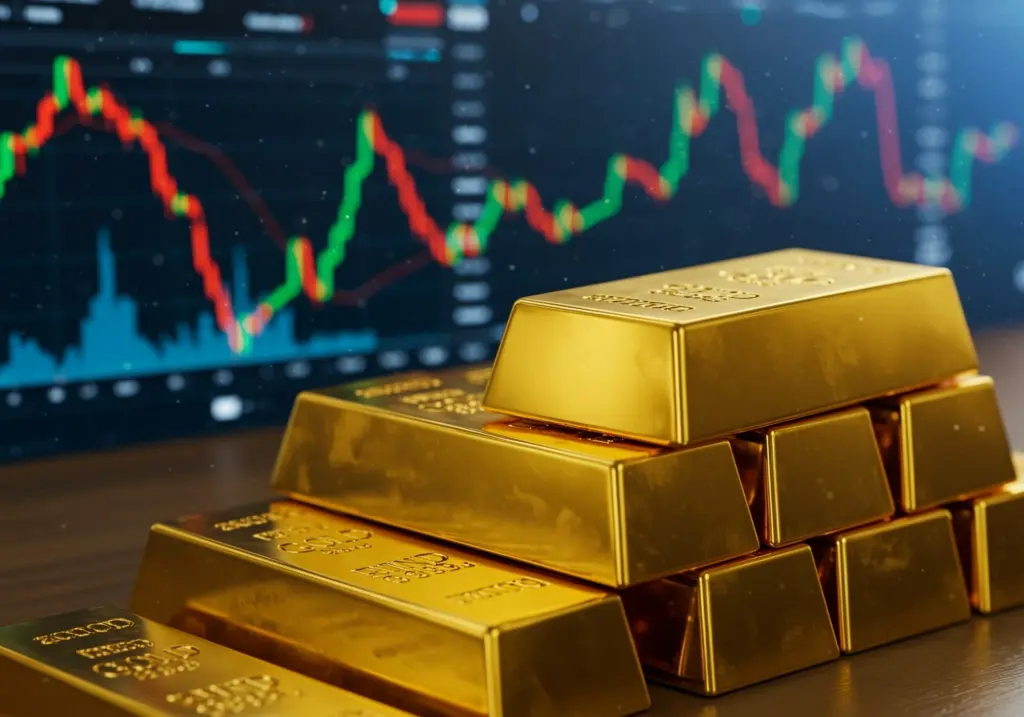
Gold’s Safe‑Haven Role During Geopolitical Stress

Gold remains one of the most reliable safe‑haven assets in global markets, and the events of early March offered another clear example of how it behaves in times of heightened geopolitical tension. On Monday, gold prices briefly moved above $5,400 per ounce as the market reacted to the latest developments in the Middle East. Soon after, prices eased as profit‑taking and broader macro factors came into play. Understanding this pattern helps explain why gold often becomes a focal point during uncertain periods, especially when markets are evaluating the potential impact of geopolitical risks on broader economic conditions.

Read More
Read More